About
I built this because I've watched capable people quietly disappear.
Research Navigator is one person's answer to a problem that was never about intelligence. It's about direction, company, and someone noticing the week you stopped showing up.
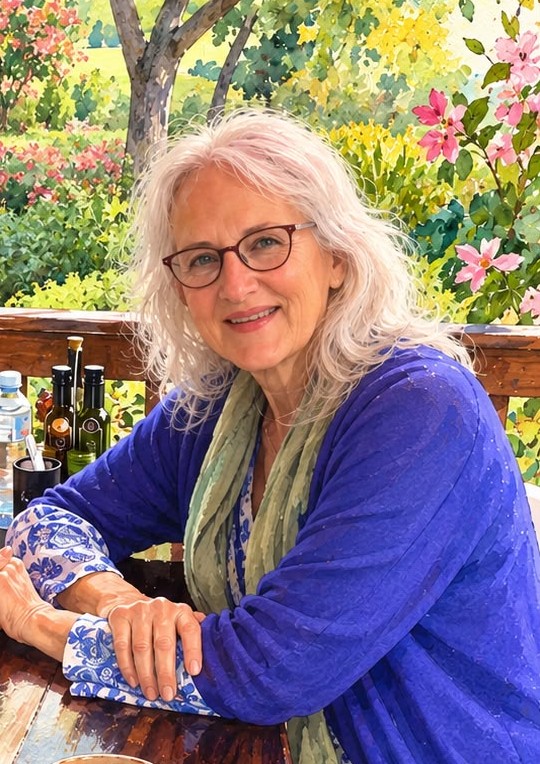
Elize Pietersen · PhD, RN
- Doctorate
- PhD (Medicine), University of Cape Town, 2017
- Also
- M. Soc. Sc. Psychiatric Nursing; Nursing Education
- Current role
- Senior research officer, Lung Infection & Immunity Unit, UCT
- Peer review
- 76 manuscripts in 2026, 15 journals, 16 countries
- Editorial board
- Primary Health Care Research & Development (Cambridge)
- Based in
- Cape Town, South Africa
I'm Elize Pietersen. A nurse for over four decades, a researcher, an educator, and an active peer reviewer.
I started out at the bedside — intensive care, maternity, trauma, psychiatry — and in the lecture hall, teaching nurses from the early 1980s. Research came later, through genetics and cancer trials, and then tuberculosis.
My PhD at the University of Cape Town followed patients with extensively drug-resistant tuberculosis across two provinces of South Africa. It taught me how much good work a person can do under real pressure, and how close that work comes to never being finished — not for lack of ability, but for lack of a path anyone ever drew for them.
I now sit on the other side of the table. In 2026 alone I peer-reviewed 76 manuscripts from authors in 16 countries, for 15 journals. I read, weekly, the exact work early-career researchers are trying to get published — and I've mentored Masters and PhD students through it one-to-one.
Research Navigator is what I wish existed then. It is being built in the open, around the people who are in it right now.
How I got here
Nurse & nurse educator · 1981–2009
Registered nurse in intensive care, oncology, maternity, trauma and psychiatry, and a lecturer in psychiatric nursing — including a stint as head of a nursing college. Clinical work taught me that people don't fail because they're incapable; they fail because nobody made the next step visible.
Clinical researcher · 1996–2010
Eleven years in the Division of Human Genetics at UCT, coordinating colorectal cancer genetic research and contributing to the international CAPP2 trial published in The Lancet. Then into drug-resistant tuberculosis.
Doctoral researcher · 2011–2017
A PhD (Medicine) at UCT on extensively drug-resistant TB, as a Bongani Mayosi National Health Scholar. The long middle of the journey, lived from the inside: ethics, methods, analysis, and the isolation that comes with all of them.
Senior researcher, reviewer & mentor · 2018–today
Senior research officer at UCT's Lung Infection and Immunity Unit, author on work in Nature Medicine and others, board member of the International Association of Clinical Research Nurses and AfriPEN, and a prolific peer reviewer.
Founder · 2026
Founded the Research Education and Practice Academy in March 2026 to help Masters and PhD students design and follow their research roadmap with ease and grit. Research Navigator is its platform.
What I believe
Four convictions underneath every module.
01
Finishing is a process, not a talent.
Nobody is born able to write a thesis. It's a sequence of learnable moves, and most people are never shown the sequence.
02
The middle is where people are lost.
Not the proposal, not the submission. The long stretch between them — ethics, methods, analysis — where no one is watching and no one is keeping score.
03
A reviewer's eye, before a reviewer's letter.
The kindest thing in research is showing someone what their work looks like to the person who will judge it — before a journal does it for them.
04
The person is the project.
Burnout isn't a side effect of doing a doctorate. It's usually the reason one doesn't finish, and it gets treated as if it were separate from the work.
The company
Research Education and Practice Academy
Research Navigator is built and run by the Research Education and Practice Academy (Pty) Ltd — REPA for short. An academy, deliberately: the aim is not a product that researchers subscribe to, but a practice they grow into and eventually teach.
The work runs in two directions. Outward, it guides early-career health researchers through the lifecycle of a study. Inward, it trains the people who support them — supervisors, co-researchers, and colleagues who want to give better feedback than "looks good, resubmit it."
REPA
Founded March 2026
76
Manuscripts peer-reviewed in 2026
40+
Years in nursing, teaching and research
If any of this is your story
You don't need to be ready. You need to be in it with someone.
Tell me where you are. If a cohort is the wrong shape for you right now, I'll say so — and point you at what isn't.